
Developing adults in children’s homes
We work with residential childcare providers to support the development of adults working in children’s homes.
Our focus is on helping homes build confidence, consistency and leadership across their teams, because that has a direct impact on how stable a home feels and on the experience of children and young people living there.
Let’s talk about what would help your team.
Why development can feel difficult to get right
Most homes are operating under pressure. Recruitment is challenging, retention takes effort, and leadership responsibility is significant.
Training is usually in place, but it does not always translate cleanly into practice. Learning can feel disconnected from the realities of the role, or insufficiently supported when people are stretched or struggling.
We are often approached by providers who want development to feel more useful to their adults and more closely aligned with the day-to-day running of the home.

How this work is approached
The starting point is always the home itself. The team, the roles, and the context matter.
Learning is designed to sit alongside practice, not separate from it. Adults are supported to apply learning to real situations and to reflect on what is happening in their work, rather than simply completing tasks or assignments.
Strong tutor support is central to this. Not as an add-on, but as part of how learning is held and sustained over time.
Level 4
Children, Young People and Families Practitioner
This programme is for adults working directly with children and young people in residential settings.
It supports practitioners to develop confidence in their role, build consistency in their practice, and understand the impact of their work within the home.
For many adults, this stage of development is important in maintaining motivation and professional confidence.
Level 5
Children, Young People and Families Manager
This programme is relevant for registered managers in children’s homes, as well as deputy managers and experienced adults preparing for their first registered role.
It supports leaders to reflect on practice, strengthen leadership approach and manage responsibility in a way that is sustainable and aligned with the values of the home.
Apprenticeships and diploma routes
Most providers access these programmes through apprenticeships. Where apprenticeships are not suitable due to eligibility, funding or timing, diploma routes are available.
Options are discussed clearly so providers and learners understand what is involved and what makes sense in their context.
Support and outcomes
Learners often tell us that consistent support is what makes the difference, particularly during the more demanding stages of their programme.
Much of that feedback reflects the work of our residential childcare team, who understand both the qualification requirements and the realities of leading and working in a children’s home.
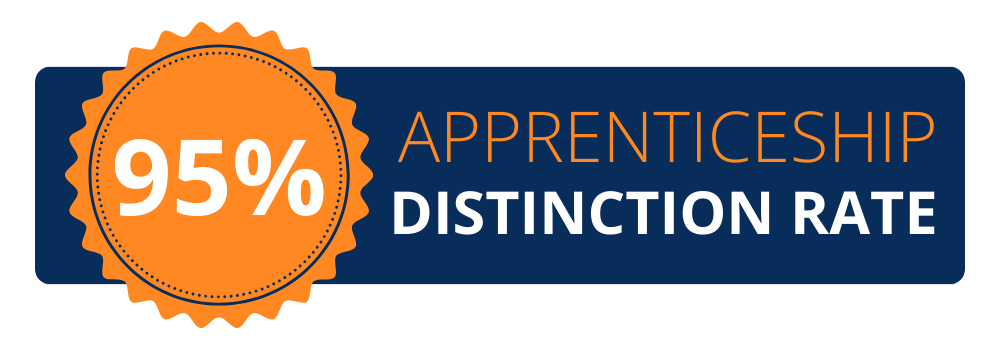
Currently, 95% of our Level 4 and Level 5 apprentices achieve a distinction. We see this as a reflection of steady support, clear expectations and learning that connects directly to day-to-day practice, rather than a focus on grades alone.
“There was no way I would have completed this programme without your support, patience and understanding.”
“I genuinely didn’t expect to get to the end, especially with a distinction.”
“You made learning manageable and supported us properly throughout.”

What providers tend to notice
● Increased confidence among adults
● Greater consistency across teams
● Leaders feeling better supported
● Fewer worries about inspection

Book a consultation
Many providers who speak to us already have training arrangements in place. The conversation is simply an opportunity to consider whether this approach would add value for their home and their team. You’ll speak to someone who works closely with residential care providers and understands how development plays out in children’s homes.
There is no obligation to proceed.
