
Adapting, Teaching and Learning at Thetsaban 1 School
Initially working in pairs, learners planned activities and lessons for what they believed would be a Year 6 class. Before long, pairs became larger planning groups, with everyone sharing ideas, discussing activities and supporting one another to create engaging and interactive learning experiences.
The collaborative approach demonstrated the strength of the group, with learners combining their creativity, knowledge and enthusiasm to develop lessons they hoped would inspire the children they would be meeting.
Planning Together
One of the most rewarding aspects of any international placement is learning to adapt, and that is exactly what our learners demonstrated during their visit to Thetsaban 1 School (Wat Thewasangkharam) in Kanchanaburi, Thailand.
This experience highlighted not only their creativity and professionalism but also their ability to respond positively to unexpected changes whilst delivering engaging learning experiences for children in a completely different educational setting.
Adapting in the Moment
However, as every teacher knows, things do not always go exactly to plan.
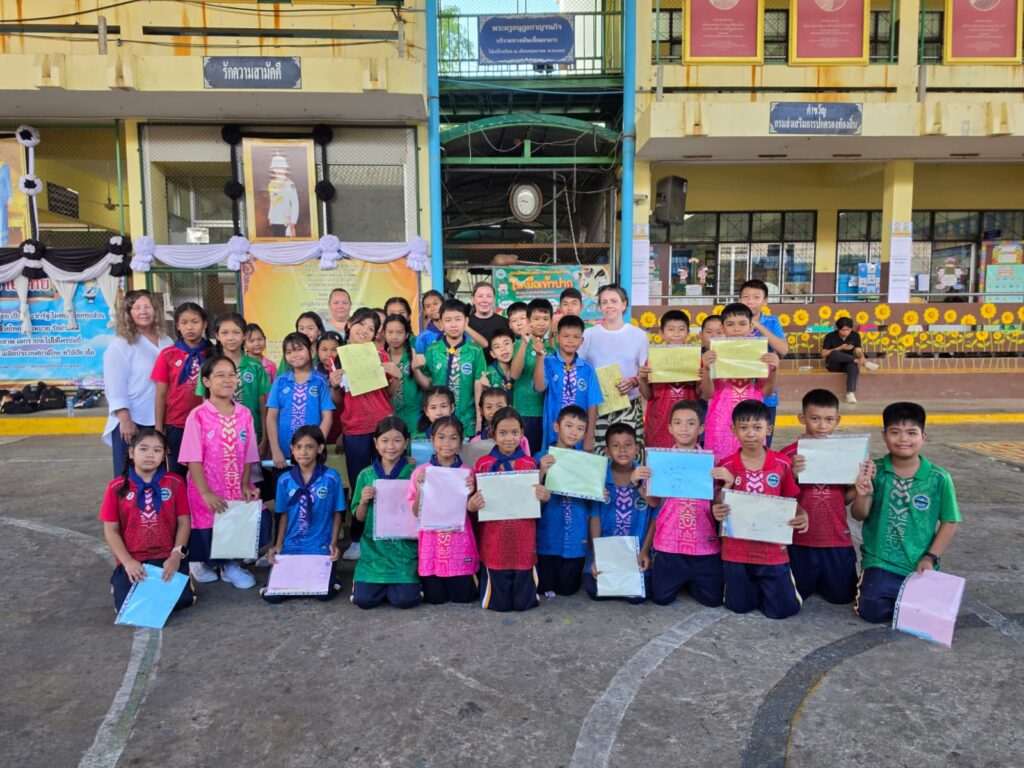
Upon arriving at the school, the principal explained that the learners would actually be teaching Year 5 pupils rather than Year 6, and that due to the heat, activities would take place outside instead of in the classrooms.
Suddenly, lesson plans needed to be adapted.
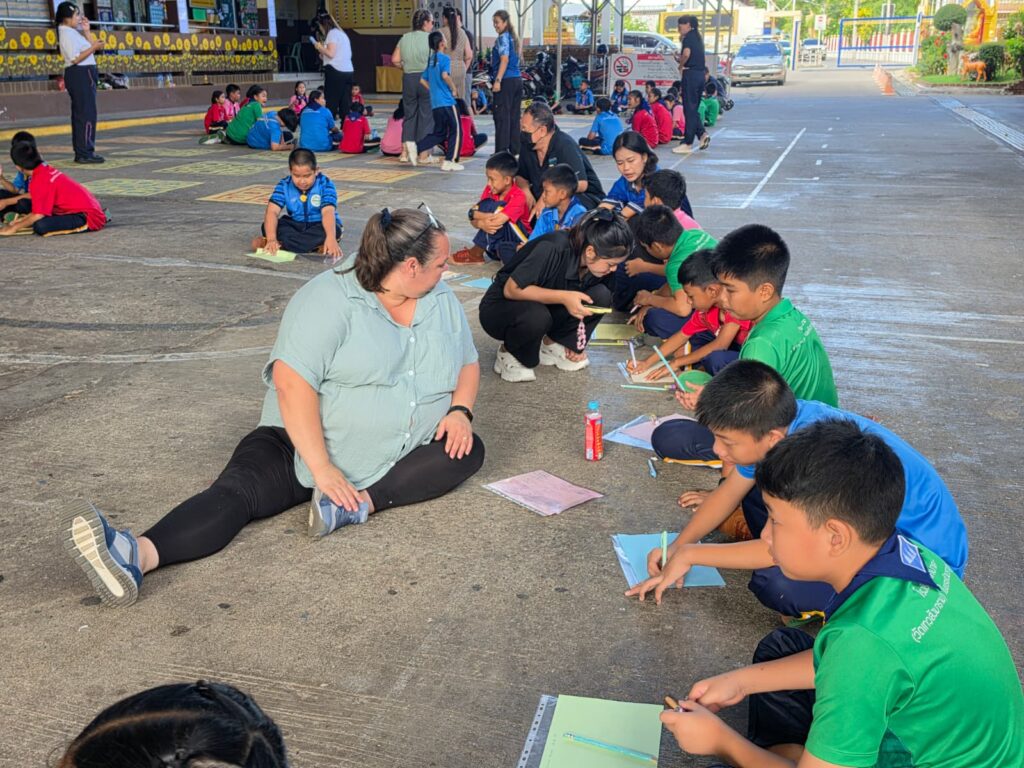
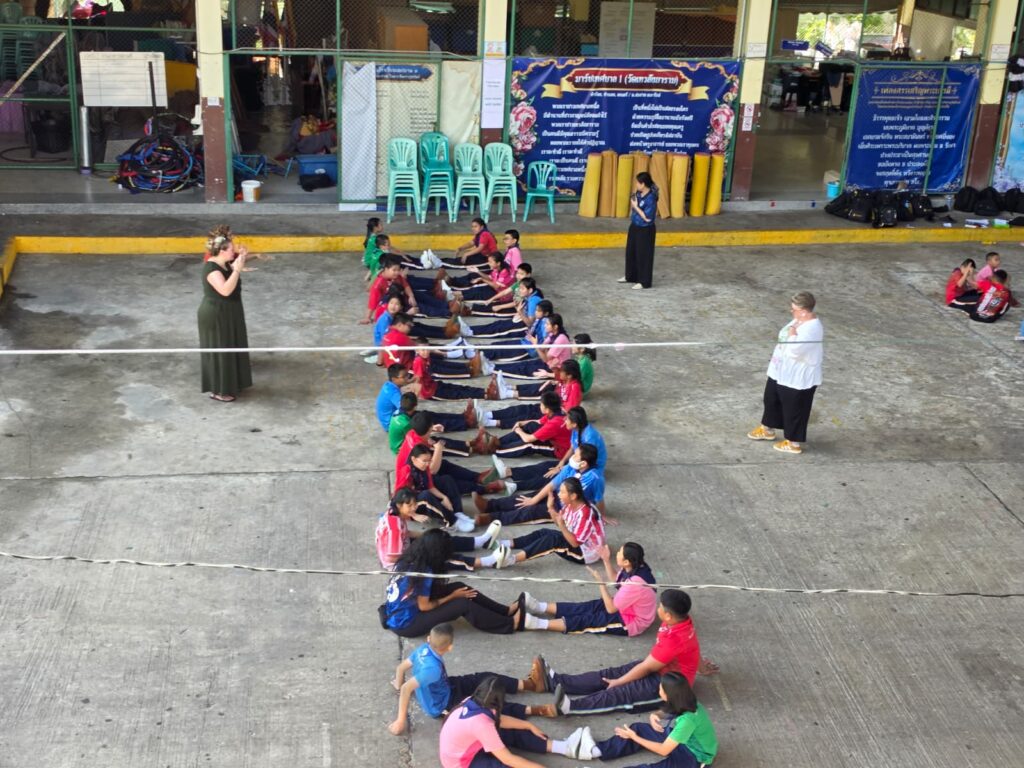
Instead of teaching indoors with tables, chairs and classroom resources, our learners found themselves delivering activities on a large shaded concrete area with groups of children sitting on the ground.
Rather than being phased by these unexpected changes, the group responded brilliantly.
Activities were adjusted to suit the children’s age and stage of development, resources were adapted for the outdoor environment, and learners quickly found creative ways to maintain engagement and participation.
Inspiring Engagement and Enthusiasm
Watching the sessions unfold was a proud moment for everyone involved.
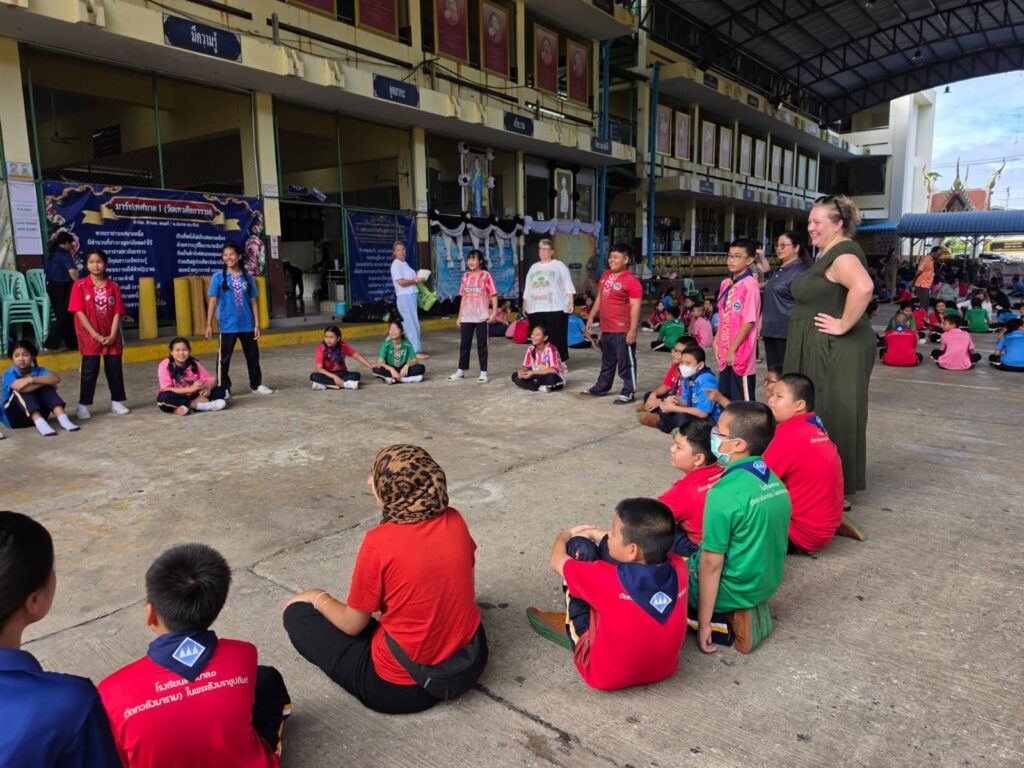
The outdoor learning space was filled with conversation, teamwork, laughter and learning. Despite the heat, both the children and our learners remained fully engaged throughout the activities.
Looking down from the surrounding classrooms, it was impossible not to notice the smiles on faces everywhere. The atmosphere was positive, energetic and collaborative, creating a learning experience that everyone enjoyed.
What stood out most was the confidence and adaptability our learners demonstrated. They embraced the challenge and transformed what could have been a difficult situation into an incredibly successful experience.
Experiencing Thai School Culture
The visit also provided fascinating insight into daily life at a Thai primary school.
Each morning, the children arrive and line up in their classes before taking part in a whole-school routine that begins with music, singing and actions. The school day then continues with the children singing the National Anthem while facing a portrait of the King.
Following this, they turn towards the local temple to say their morning prayers before taking part in group exercises.
Perhaps the most impressive aspect was that pupils themselves volunteer to lead the exercises and dances, helping to build confidence, responsibility and leadership skills from a young age.
Naturally, our learners couldn’t resist joining in and quickly became part of the morning routine.
Learning Through Play in the Early Years
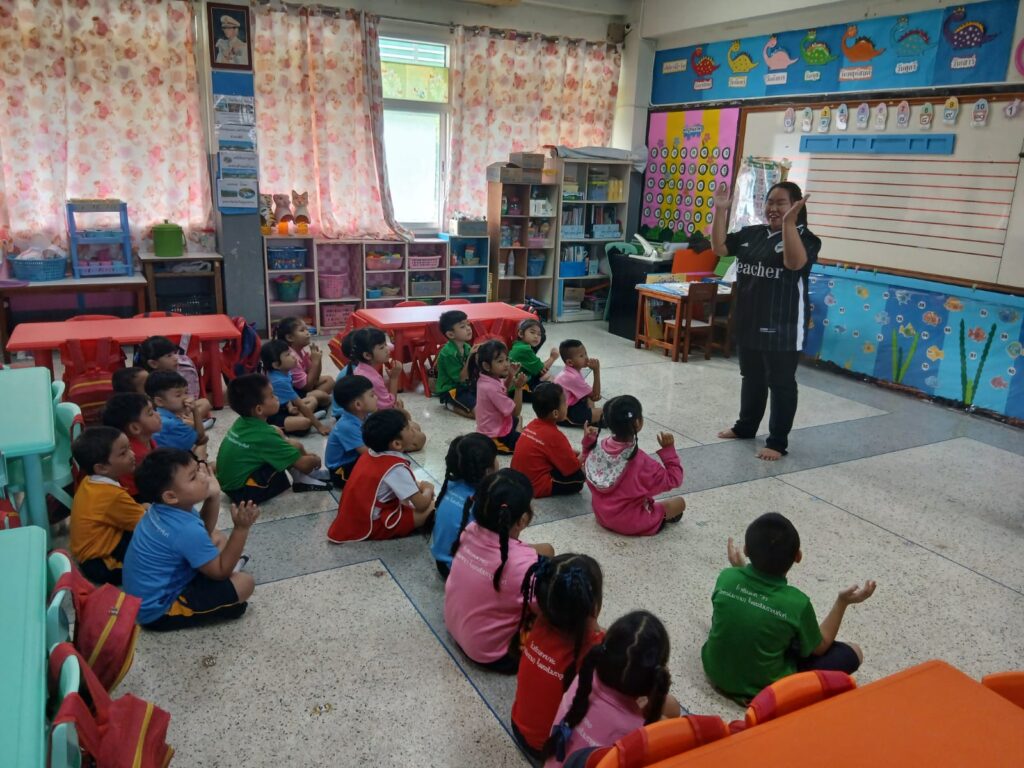
As we toured the school, it was clear that learning through play plays an important role in the early years classrooms.
Nursery and Reception children started their day with songs, action rhymes and counting activities, sometimes in both Thai and English.
The classrooms were thoughtfully organised to promote independence. Each child had a picture and number displayed outside the room. These matched their storage spaces, cubby holes and floor seating positions, helping children manage their own belongings and routines.
The system demonstrated how simple visual strategies can encourage confidence and independence from an early age.
Exploring Learning Across the School
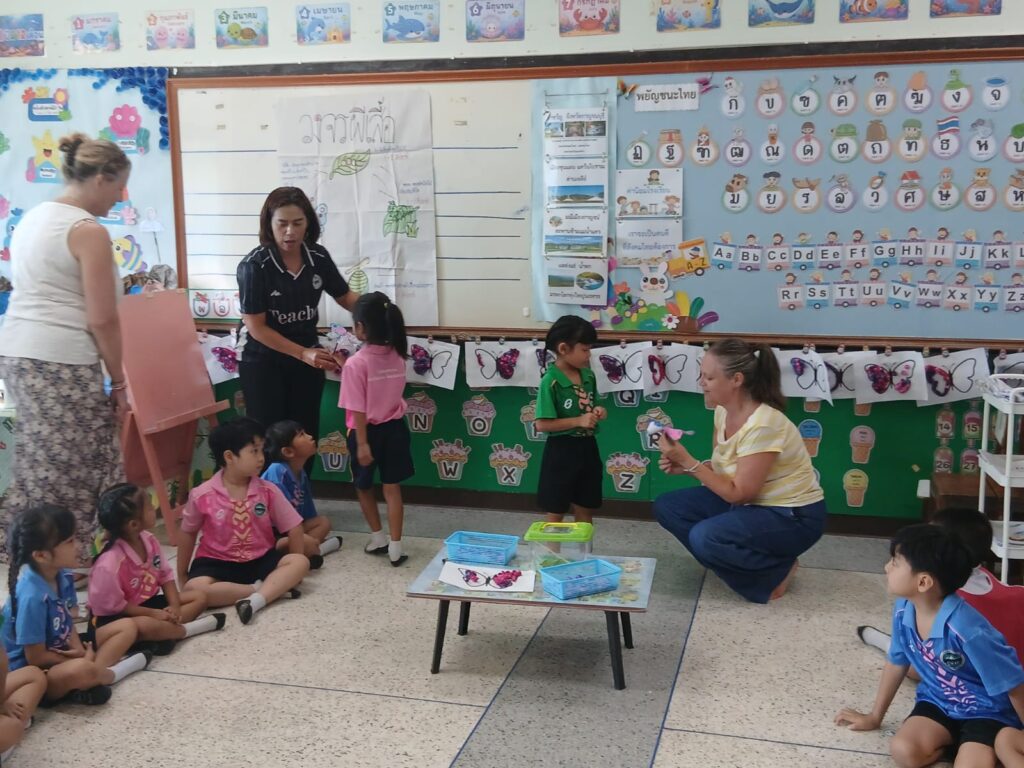
The visit also allowed us to observe teaching and learning across several year groups.
In Year 1, pupils were learning about the life cycle of caterpillars and butterflies. Learners were fascinated to see children using microscopes to examine real chrysalis specimens that were being kept in the classroom.
Meanwhile, pupils in Years 3 and 4 proudly shared their work and demonstrated collaborative maths activities. Working in groups, they tackled challenges together, discussing ideas and developing solutions through teamwork and problem-solving.
These classroom observations highlighted the many similarities between Thai and UK education, with curiosity, collaboration and active learning at the heart of the curriculum.
A Valuable International Experience
This visit perfectly captured the purpose of the Turing Scheme.
Our learners gained first-hand teaching experience, developed adaptability and resilience, and experienced a different education system from the inside. At the same time, they built meaningful connections with pupils and staff who welcomed them so warmly into their school community.
From adapting lessons on the spot to participating in school traditions and observing learning across every age group, the day provided invaluable personal and professional development.
Most importantly, it demonstrated that great teaching isn’t about having the perfect environment. It’s about being flexible, building relationships and inspiring children to learn wherever you are.
